

Spend limits
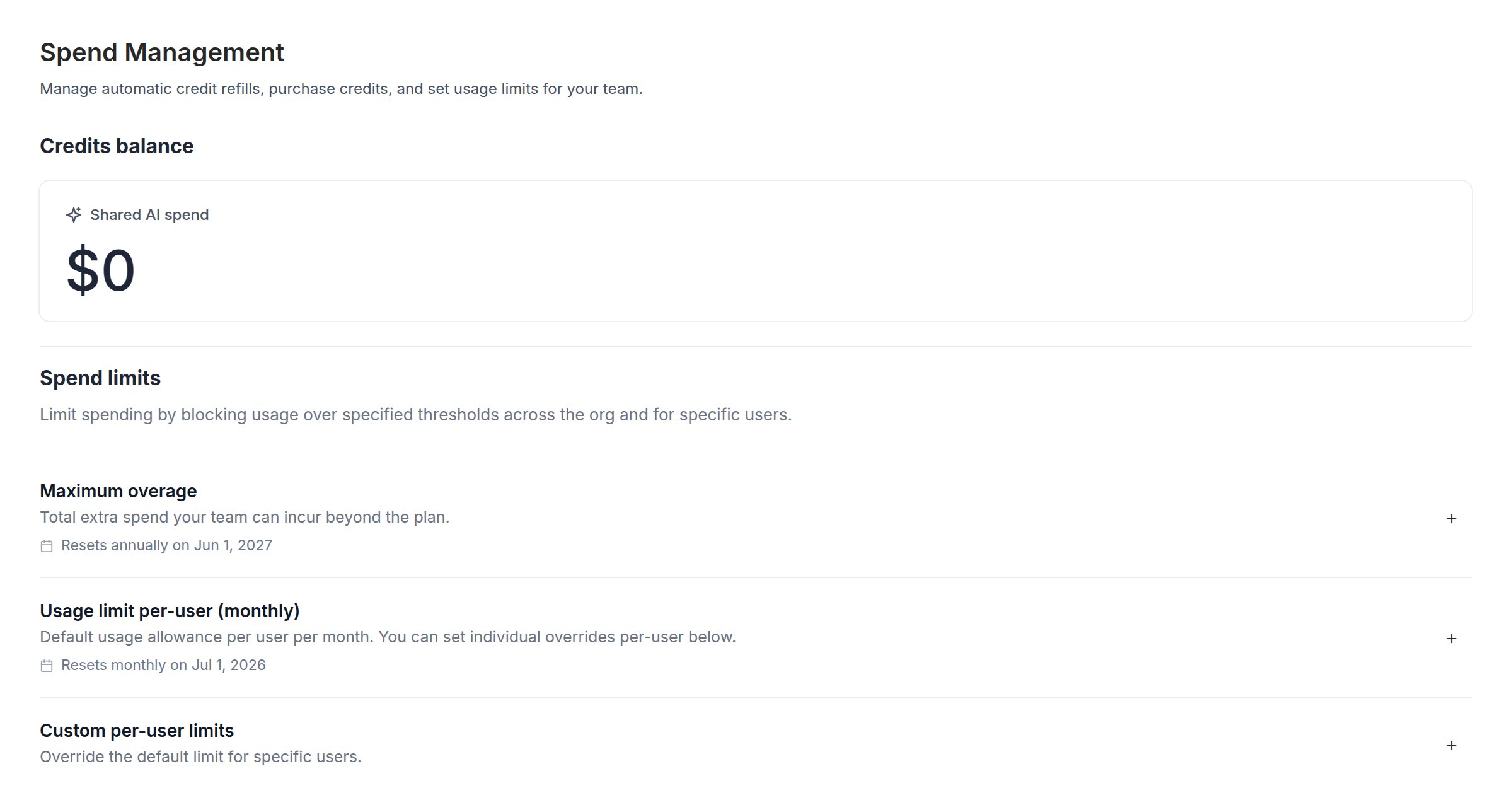
Spend limits prevent unexpected charges by capping usage at both the organization and individual user level. You can set org-wide overage spending limits, which are enforced based on your plan’s billing cycle (monthly or annual). You can also set monthly per-user spend limits. Both budgets reset automatically at the start of each period.Maximum contract overage
Enterprise organizations can set an overage cap: the maximum additional usage your team can consume beyond your contractual commit. This is your primary guardrail against runaway spending if your team exceeds your committed usage.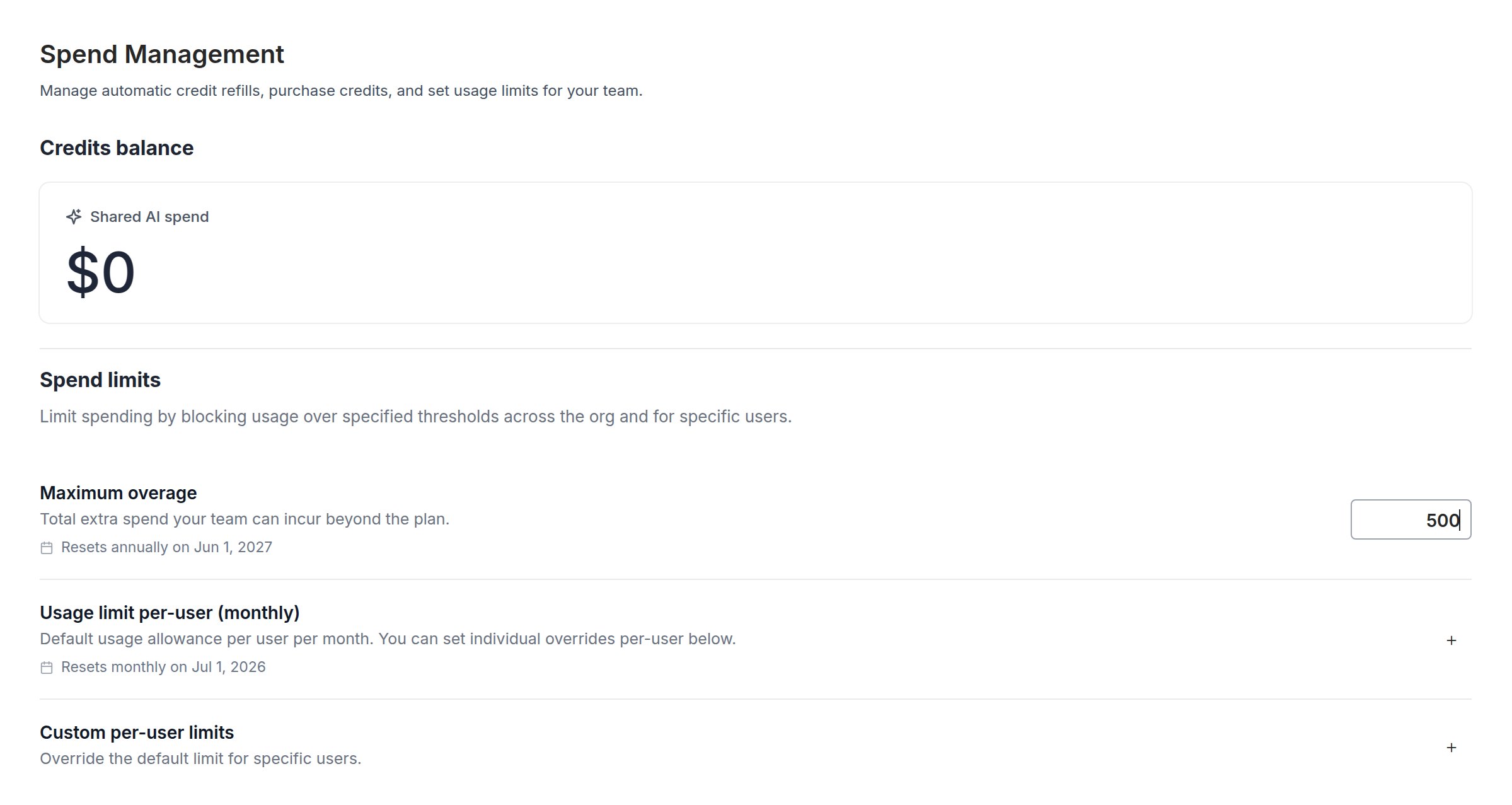
Default usage limit (monthly)
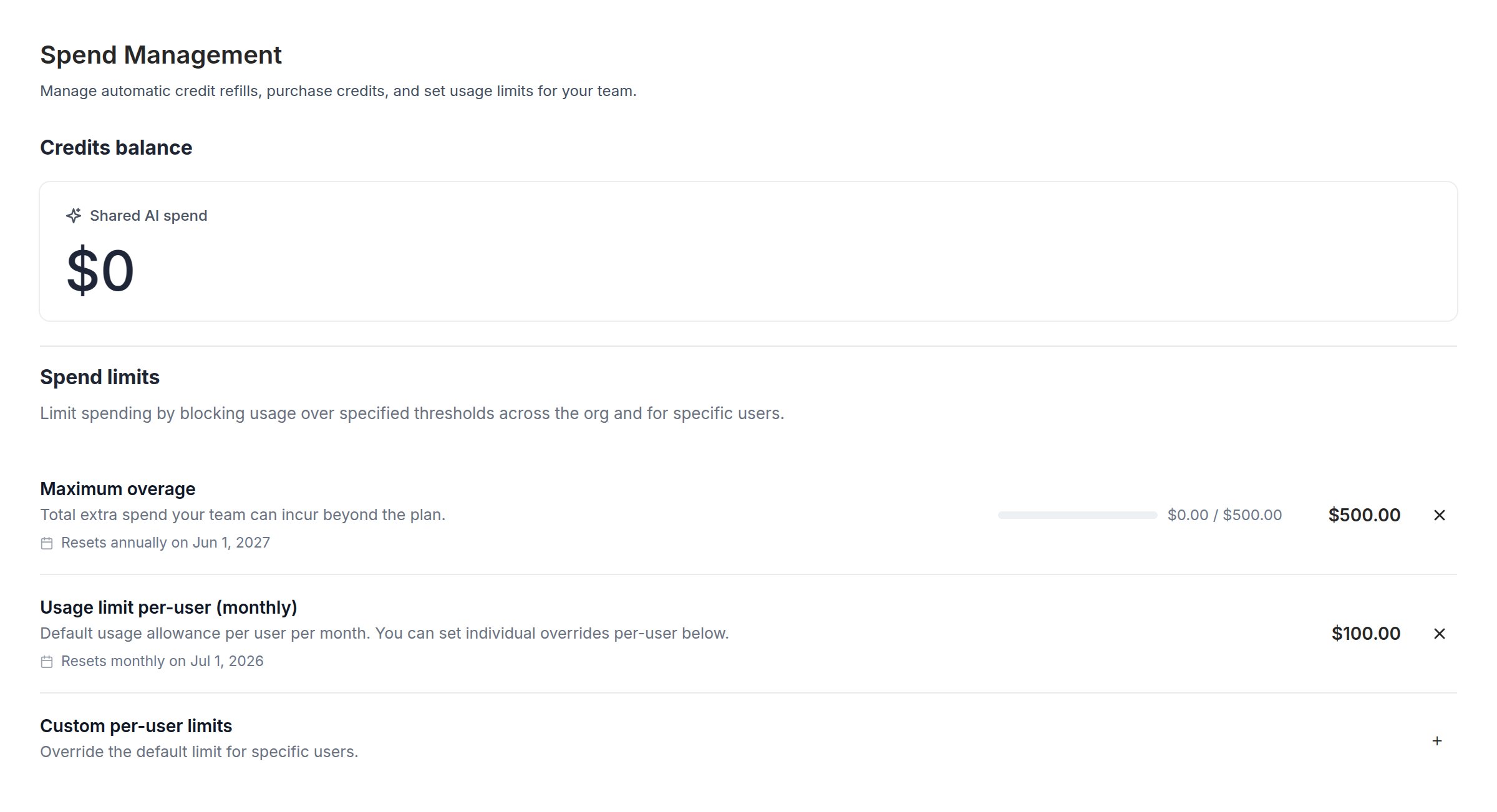
Set a default allowance that applies to every user in your organization. This is the maximum any individual user can consume per month. Per-user limits always reset monthly, regardless of your plan’s billing cycle.- In the Spend limits section, click + next to Default usage limit (monthly)
- Enter the limit
- The limit takes effect immediately for all users without a custom override
Custom per-user usage limits
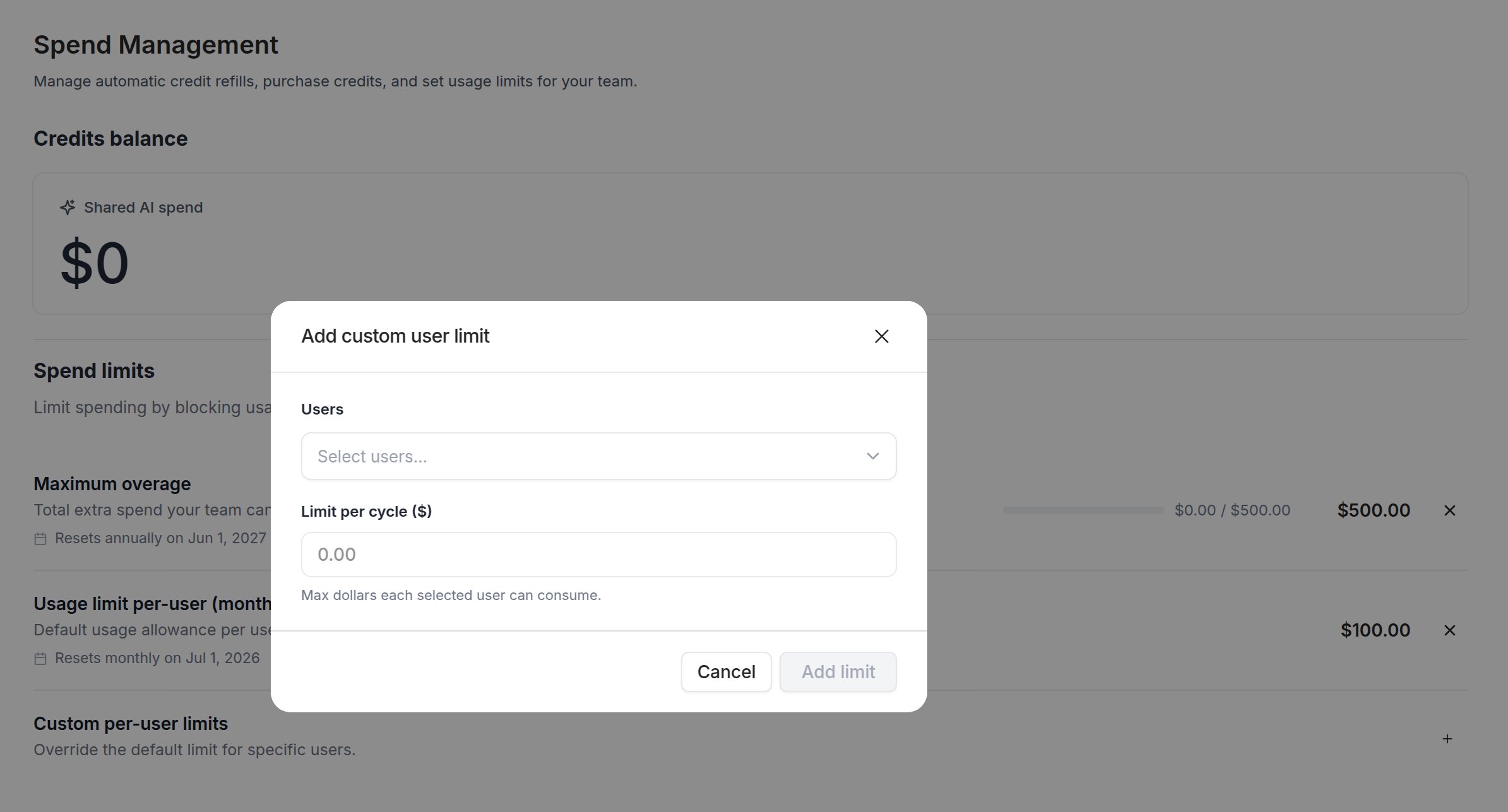
Override the default limit for specific users who need more (or fewer) GAUs or dollars.- Click + next to Custom per-user usage limits
- Select a user from the dropdown, including pending invitees who have not accepted yet
- Set their individual limit
What happens when a limit is reached
When a user or organization reaches a configured spend limit:- AI-powered features (Clark and other AI interactions) are paused for the affected scope
- Users see a notification explaining that their GAU limit has been reached
- Administrators can increase limits or purchase additional GAUs to resume usage
- Limits reset automatically at the start of each period (monthly for per-user limits; your billing cycle for the org-wide overage cap)
Programmatic spend management via MCP
You can monitor spending and configure limits programmatically using the Superblocks MCP server. This is useful for automated monitoring, integrating with internal tools, or managing limits at scale.Available tools
All billing MCP tools require the
billing:manage permission.
Example: Check current usage
Ask your AI coding agent:get_billing_plan_summary and return your current usage, remaining GAUs, and billing cycle dates.
Example: Set a per-user limit
update_user_billing_usage_limit with is_default: true and credit_limit: 50.
Example: Monitor daily usage trends
get_billing_usage_daily with the appropriate date range and return a breakdown of daily consumption.
Spending notifications New
Spend alerts notify administrators by email when usage approaches configured thresholds, so you can take action before hitting a billing surprise. Configure alerts from the Spend alerts section at the bottom of the Spend Management page.Alert types
Superblocks supports four alert types. The types available to your organization depend on your plan:Configuring alerts
- Navigate to Organization Settings > Spend Management
- Scroll to the Spend alerts section
- Click + Add alert
- Choose an alert type — only types available on your plan are shown
- Set one or more thresholds (for example, notify at 80% and 100% of your allocation)
- Save the alert
Threshold units
The units available depend on the alert type:- Organization spend: percentage of allocation, GAUs used, or GAUs remaining
- Per-user spend: GAUs consumed by a single user
- Overage spend: overage GAUs consumed (or dollars, on dollar-commit plans)
- Refill spend: GAUs or dollars spent on refills